Grey Market vs. Verified Refurbished
Parts Sourcing Risks: Grey Market vs. Verified Refurbished
Coast to Coast HTM · Healthcare Technology Management



FAILED. What now?
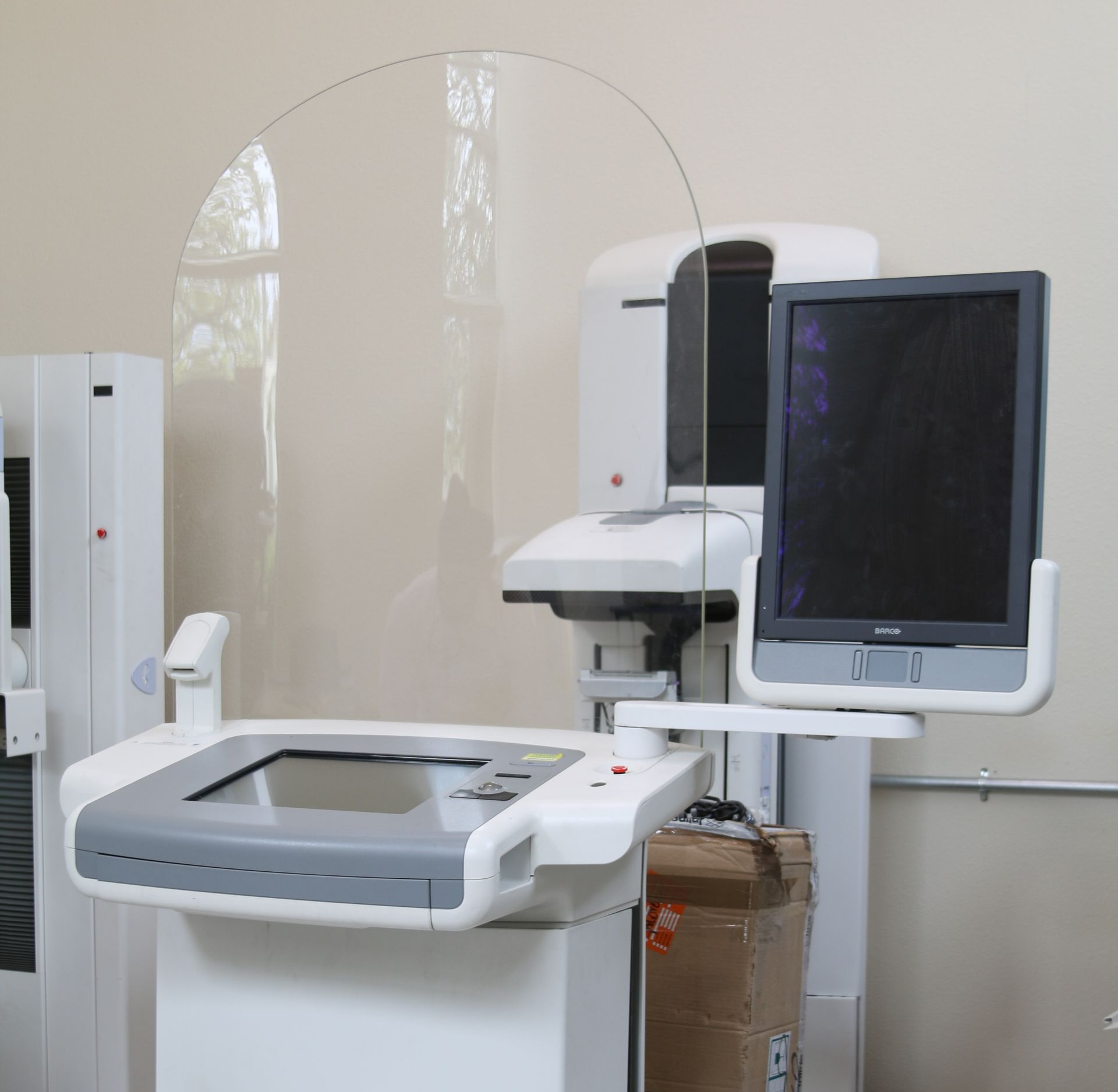
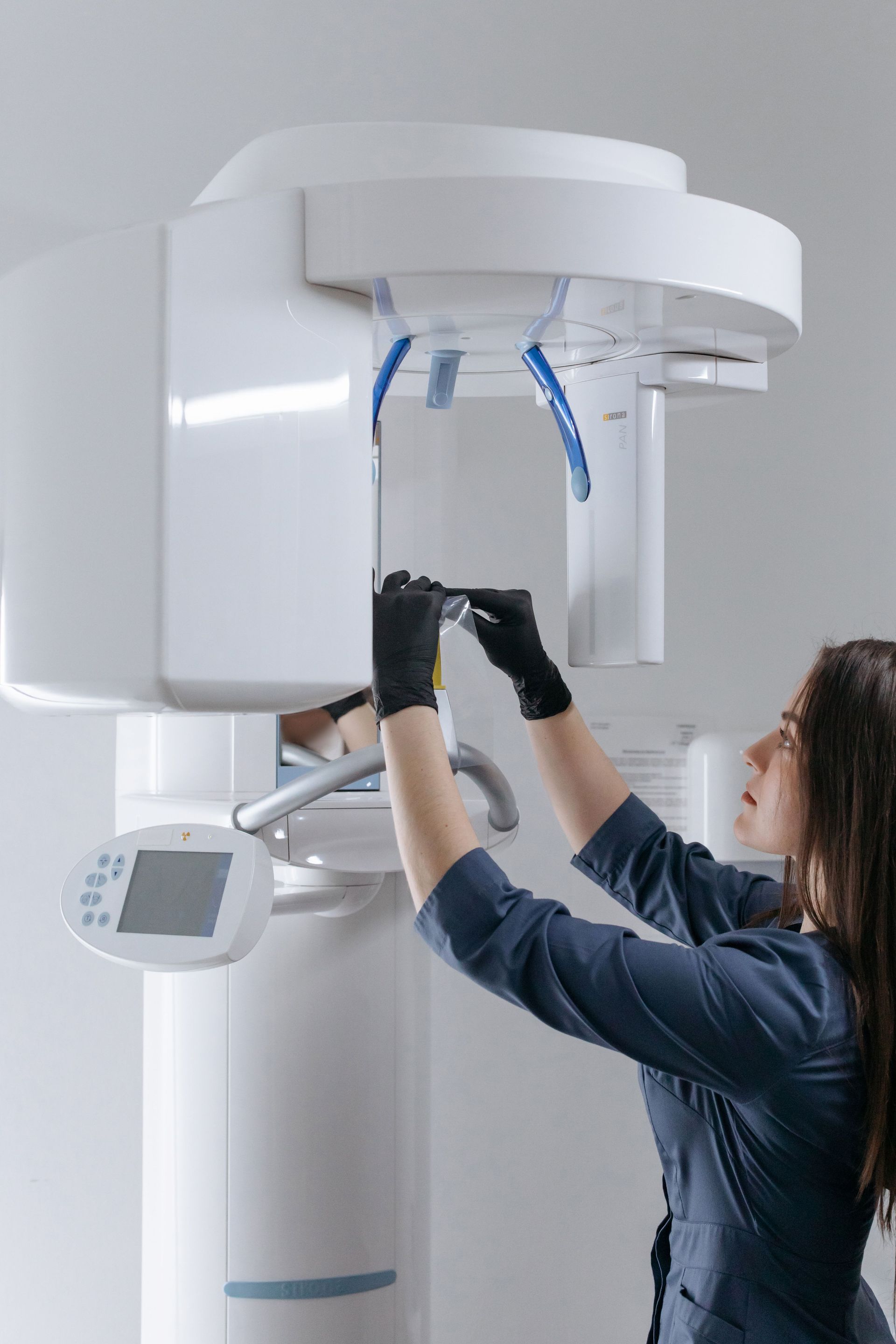
A detector board fails on a Friday afternoon. Your mammography suite is booked solid through the following week. Then a supplier you have never worked with emails back within the hour: the part is in stock, it is thousands less than the quote from your usual channel, and it can ship overnight.
That moment is where most grey market decisions get made. Not out of carelessness, but out of pressure. The schedule is full, patients are waiting, and the cheaper part is sitting right there.
Before that purchase order goes out, it is worth understanding exactly what separates a grey market component from a verified refurbished one — because the difference rarely shows up on the invoice. It shows up months later, in downtime, in a failed inspection, or in an image a radiologist cannot read with confidence.
What “Grey Market” Actually Means
Grey market parts are not counterfeit by definition, and they are not necessarily stolen. The term describes components sold outside the manufacturer’s authorized distribution channel — pulled from decommissioned systems, liquidated from closed facilities, resold across borders, or moved through brokers who never physically handled them.
The problem is not where the part came from. The problem is that nobody can tell you where it came from. A grey market component typically arrives with:
- No documented provenance. No record of the system it came out of, how many hours it ran, or why it was removed.
- No functional testing. “Pulled working” is a claim, not a test result. It usually means the system powered on before it was parted out.
- No environmental history. A board stored in an uncontrolled warehouse, shipped without ESD protection, or exposed to humidity can pass a bench check and still fail early.
- No calibration data. Especially critical for detectors, generators, and anything in the imaging chain that affects dose or image quality.
- No meaningful warranty. A 30-day guarantee on a component with a multi-year expected service life is not coverage. It is a return window.

The Risks That Do Not Show Up on the Invoice
Compliance exposure. This is the one that keeps imaging directors awake. Mammography systems operate under strict federal oversight, and accreditation bodies expect documented evidence that service and replacement parts meet manufacturer specifications. When an inspector asks for the paper trail on a replaced component and the answer is a broker invoice with a part number on it, that is a finding waiting to happen. Undocumented parts can jeopardize accreditation status — and an imaging suite that cannot bill is far more expensive than any part.
Image quality drift. An out-of-spec component rarely fails outright. It degrades. Detector uniformity shifts, contrast resolution softens, artifacts appear intermittently. In mammography and DEXA, where the diagnostic value lives in fine detail and reproducible measurement, subtle degradation is the dangerous kind. Staff start repeating exams. Radiologists start hedging. Nobody connects it back to a board swapped four months earlier.
The false economy of downtime. A component that saves several thousand dollars up front and fails in ninety days has not saved anything. Add the second service call, the second shipping cycle, the rescheduled patients, the staff overtime, and the lost billable studies, and the cheaper part routinely becomes the most expensive line item of the quarter. Downtime cost is almost always larger than parts cost — it just lands in a different budget.
Cascading damage. Imaging systems are integrated. A power supply operating slightly out of tolerance can quietly stress downstream boards. What began as one inexpensive replacement becomes a multi-component failure that takes the room offline for a week.
No one to call.
Brokers move inventory; they do not support it. When a grey market part fails at 7:00 a.m. with a full schedule, there is no engineer who knows your system, no service history, and no accountability. You are starting over.
What “Verified Refurbished” Should Actually Mean
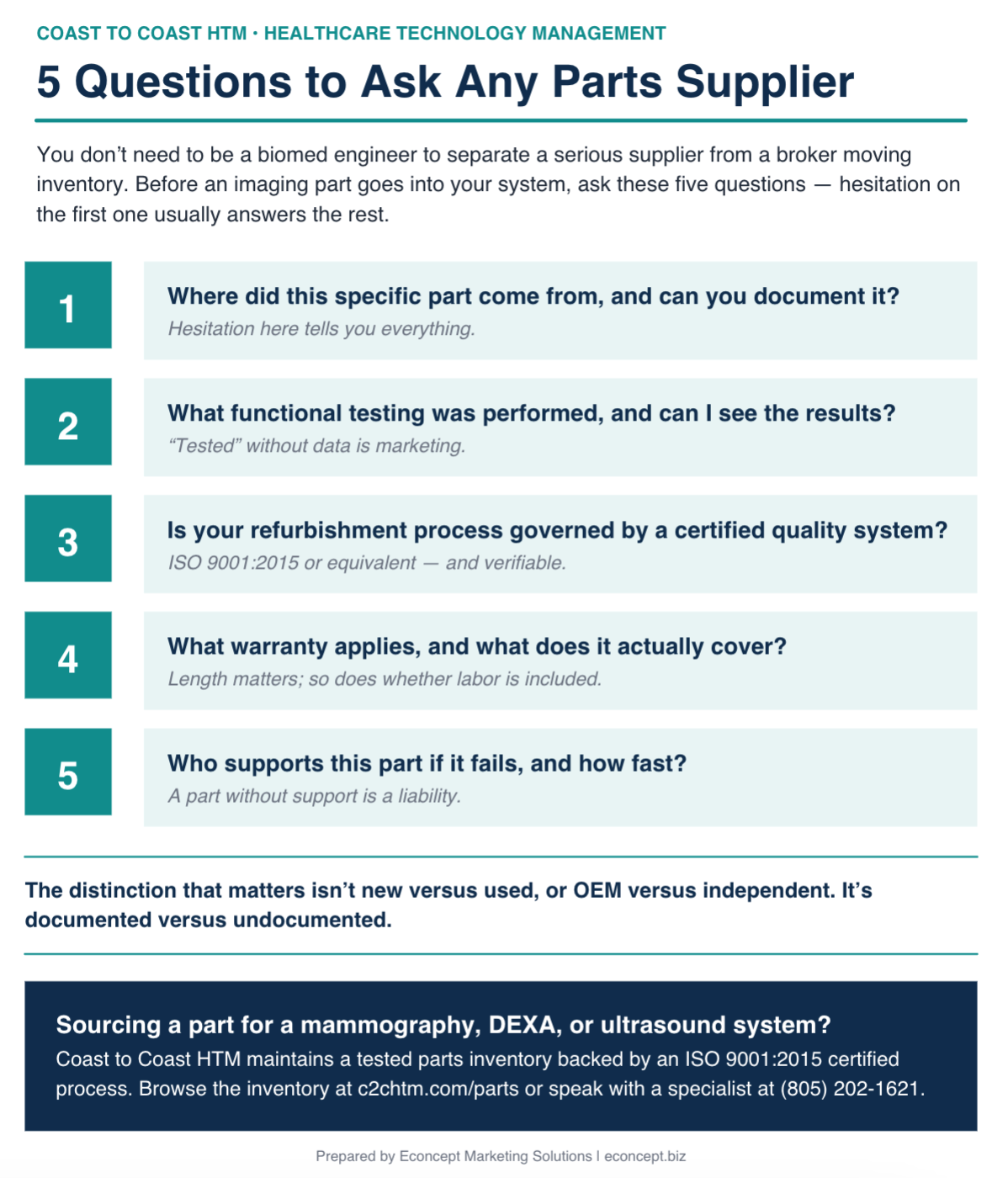
Refurbished is not the opposite of risky. Used carelessly, the word means very little — plenty of suppliers apply it to a part that was wiped down and reboxed. What matters is the process behind it, and whether that process is documented and auditable.
A properly verified refurbished component carries:
- Documented incoming inspection. The part is identified, its source recorded, and its physical condition assessed on arrival.
- Functional testing against specification. Not “it powers on” — measured performance compared to manufacturer tolerances.
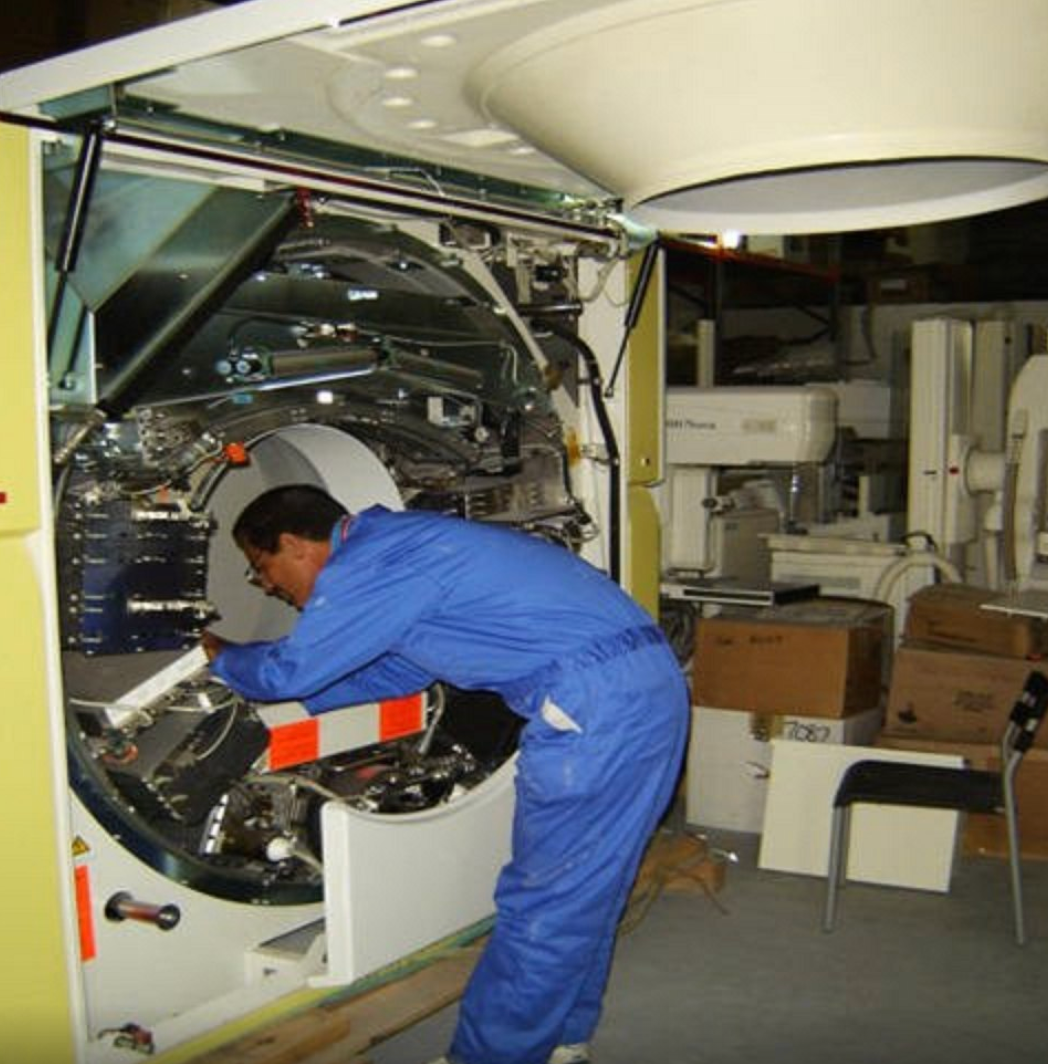
- Repair and component-level remediation where required, performed by technicians trained on that modality.
- Calibration and verification appropriate to the component’s role in the imaging chain.
- A traceable record that follows the part into your equipment file and is available when an inspector asks.
- A warranty that reflects genuine confidence in the testing performed.
- That is the practical difference between a quality management system and a promise. At Coast to Coast HTM, our ISO 9001:2015 certified process governs how replacement components are inspected, tested, and documented before they ever reach a customer’s system — and our technicians are developed through an AAMI-aligned apprenticeship program so the person installing the part understands the modality it is going into.
Smart Sourcing Is Not the Same as Cheap Sourcing
None of this means OEM-direct is the only defensible option. Independent service and quality refurbished parts are exactly how imaging departments control cost without compromising care — and they remain one of the most effective levers available for stretching a service budget. The distinction that matters is not new versus used, or OEM versus independent. It is documented versus undocumented.
A verified refurbished component with a traceable test record and a real warranty is a sound financial decision. An untraceable part from a broker who cannot tell you where it has been is a gamble placed with your uptime, your accreditation, and ultimately your patients’ images.
When the pressure is on and the cheap part is one click away, the question worth asking is simple: if this fails in ninety days, what does it actually cost us?
Sourcing a part for a mammography, DEXA, or ultrasound system?
Coast to Coast HTM maintains a tested parts inventory backed by an ISO 9001:2015 certified process, with service support from technicians trained on the modality. Browse our inventory at c2chtm.com/parts or speak with a specialist at (805) 202-1621.